

Kegareboshi Review: Story, Animation, Characters, Dark Themes & Final Verdict
Kegareboshi is a 2025 two-episode adult OVA from Studio T-Rex that takes a very different approach from straightforward comedy-focused adult animation.
At first glance, the premise appears almost like a conventional idol story.
Ibuki Asaba and Koharu Shirasaki perform together as the idol duo Stellarista, building their careers under the bright lights of the entertainment industry.
But the cheerful surface does not last.
Kegareboshi quickly shifts into a much darker story involving manipulation, scandal, exploitation, ambition, and the hidden power structures surrounding the entertainment industry.
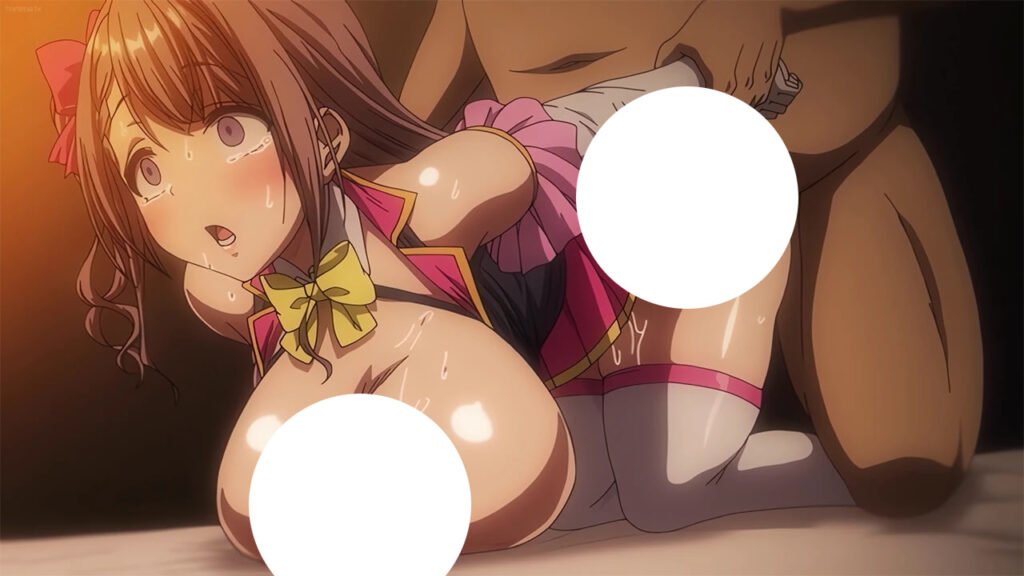
That contrast between glamorous idol imagery and a bleak underlying narrative is the production’s defining characteristic.
This review focuses on the story, characters, animation, direction, pacing, sound, community reception, and overall production quality, without describing its explicit material.
Quick Information
| Category | Details |
|---|---|
| Title | Kegareboshi |
| Format | OVA |
| Episodes | 2 |
| Release | 2025 |
| Studio | T-Rex |
| Source | Manga |
| Main duo | Stellarista |
| Main characters | Ibuki Asaba, Koharu Shirasaki |
| Status | Completed |
AnimeOshi currently lists Kegareboshi at 6.9/10 from 170 ratings. Episode 1 is rated 6.9 and Episode 2 is rated 7.0.
That puts the title in an interesting position.
It isn’t universally acclaimed, but it has enough positive reception to suggest that its darker narrative approach works for a portion of its audience.
Stream Now Kegareboshi
watch Kegareboshi online, free hentai, Kegareboshi hentai watch online
Episode no 1 Download & stream buttons
Episode no 2 Download & stream buttons
Episode no 3 Download & stream buttons
Episode no 4 Download & stream buttons
Story & Premise
The story begins with Stellarista, an idol duo made up of Ibuki Asaba and Koharu Shirasaki.
The opening establishes the bright side of the entertainment industry.
There are performances, fans, ambition, and the promise of success.
Then the narrative introduces the darker side.
Ibuki discovers a scandal involving Koharu and their manager, Matsunami.
From there, the story becomes increasingly focused on manipulation and control.
The central conflict isn’t simply about relationships.
It is about power.
Who controls the careers of performers?
Who controls the information surrounding a scandal?
Who benefits when someone loses their ability to make independent decisions?
Those questions give Kegareboshi more narrative ambition than a conventional short adult OVA.
The Idol Industry Setting
The idol setting is arguably the production’s smartest creative decision.
Idol anime normally uses bright colors, energetic performances, friendship, ambition, and optimistic storytelling.
Kegareboshi deliberately uses those familiar elements as a contrast.
The brighter the public image becomes, the more uncomfortable the hidden side of the story feels.
This creates a visual and thematic duality:
Stage vs reality.
Public image vs private suffering.
Success vs exploitation.
That contrast gives the production a stronger identity than its adult-animation classification alone would suggest.

Ibuki Asaba
Ibuki functions as one of the emotional centers of the story.
Her character begins with ambition and confidence.
She wants to succeed.
That makes the later developments more significant because the story isn’t introducing her as someone who expects everything to go wrong.
She believes in the career she is building.
The narrative then challenges that optimism.
This provides the production with a stronger emotional structure than a simple sequence of unrelated scenarios.
Related post:- Harem-tou e Youkoso! Review: Story, Characters, Animation & Final Verdict
Koharu Shirasaki
Koharu’s role is closely connected to the scandal that drives the story.
Her relationship with the industry’s power structure becomes an important part of the central conflict.
The character also helps establish one of the production’s major themes:
How much control does an individual actually have inside an industry where other people can influence their career?
That question is more interesting than the surface-level premise and gives Kegareboshi something to analyze beyond its adult classification.
The Supporting Cast
Matsunami and Kurozuka serve very different narrative functions.
Matsunami represents the professional environment surrounding the idols.
Kurozuka represents a much more manipulative form of control.
The distinction between these characters helps the story escalate.
Instead of having one generic antagonist, the production creates different layers of pressure.
That makes the conflict feel more structured.
Animation & Art
Animation is one of Kegareboshi‘s stronger qualities.
AnimeOshi’s user comments repeatedly mention lighting, rain, reflections, color grading, and atmosphere.
This is particularly noticeable in the second episode.
The visual identity becomes darker and colder, with blue tones and nighttime environments replacing the brighter idol aesthetic.
That shift isn’t merely cosmetic.
It reflects the change in the story.
Color as Storytelling
The episode titles, “Red” and “Blue,” are particularly useful for understanding the production’s visual direction.
Episode 1 establishes the brighter public world of Stellarista.
Episode 2 becomes substantially colder and more melancholic.
AnimeOshi’s episode page describes Episode 1 as the narrative and tonal foundation, while Episode 2 continues the consequences of the first episode.
The community reaction to Episode 2 repeatedly mentions its blue tint, rain, reflections, and melancholic atmosphere.
That suggests the production is using color deliberately rather than simply decorating the background.
Sound Design
Sound is another unexpectedly strong aspect.
Several community comments specifically mention silence, music changes, and environmental sound as important to the atmosphere.
That is especially effective during scenes where the production slows down.
Instead of constantly using dialogue to explain what characters are feeling, the anime occasionally allows silence and music to carry the mood.
For a two-episode OVA, that is a useful directorial technique.
Pacing
The pacing is more ambitious than the average short OVA.
Episode 1 has to introduce:
- Stellarista
- The idol environment
- Ibuki
- Koharu
- Matsunami
- The initial scandal
- The central conflict
Episode 2 then deals with the consequences.
AnimeOshi currently rates the first episode 6.9/10 and the second 7.0/10, suggesting that viewers slightly preferred the continuation.
That is interesting because the second episode has a slower, darker atmosphere.
The change suggests that the narrative becomes more compelling once the initial setup has been established.
Storytelling Strengths
The strongest storytelling choice is the contrast between appearance and reality.
The idol world looks glamorous.
The underlying narrative is not.
That contradiction gives the production a clear thematic identity.
Another strength is escalation.
The story doesn’t reveal everything immediately.
Instead, it gradually introduces darker consequences.
That keeps the two episodes connected.
Storytelling Weaknesses
The biggest weakness is compression.
There is simply not enough time for every character to receive extensive development.
Some plot developments happen quickly.
Some emotional transitions could benefit from additional episodes.
The short OVA format means that viewers have to accept certain developments without receiving the amount of buildup that a television series might provide.
AnimeOshi user comments also include criticism of slower sections and confusing flashbacks in Episode 2.
So the pacing isn’t universally praised.
Community Reception
Current reception is relatively consistent across the two episodes.
Related Post:- Koushoku no Chuugi Kunoichi Botan Review: Is This hentai Worth Watching?
AnimeOshi:
- Overall: 6.9/10 from 170 ratings
- Episode 1: 6.9/10 from 100 ratings
- Episode 2: 7.0/10
The comments show several recurring positive themes:
Atmosphere
Rain, reflections, nighttime lighting, and blue color grading are frequently mentioned.
Sound
Viewers notice the use of silence and soundtrack changes.
Visual direction
The production’s lighting and color treatment receive positive attention.
Dark narrative
Some viewers were surprised by how quickly the story moved away from the cheerful idol setup.
There are also criticisms:
- Some scenes feel slow.
- Flashbacks can interrupt the flow.
- The narrative becomes very dark very quickly.
- Character development is limited by the short format.
Why the Reception Is Interesting
Kegareboshi demonstrates why numerical ratings alone aren’t enough.
A 6.9/10 score doesn’t mean viewers dislike the anime.
It suggests something closer to a niche production with clear strengths and weaknesses.
The production isn’t necessarily trying to appeal to everyone.
It is deliberately darker than a conventional idol story.
That means viewers who enjoy psychological drama and darker entertainment-industry stories may respond more positively than viewers who expected a lighter idol narrative.
What Works
- Strong visual identity
- Idol-industry setting
- Effective contrast between glamour and darkness
- Detailed character designs
- Atmospheric lighting
- Memorable color direction
- Good use of sound
- More narrative ambition than many short adult OVAs
What Doesn’t Work
- Extremely compressed storytelling
- Some confusing transitions
- Limited character development
- Dark subject matter may be uncomfortable
- Some slower sequences
- Not suitable for viewers looking for lighthearted adult comedy
Who Should Watch It?
From a purely editorial perspective, Kegareboshi is best suited to adult viewers interested in:
- Dark drama
- Psychological themes
- Idol-industry stories
- Character-driven conflict
- Atmospheric animation
- Short-form storytelling
It is not a good choice for someone looking for a light romance or comedy.
The production is deliberately bleak.

Who Should Skip It?
Viewers who don’t want stories involving manipulation, coercion, or exploitation should avoid it.
That isn’t a minor element that appears briefly.
It is part of the central dramatic framework.
Related Post:- Mesu o Karu Mura Review: Story, Animation, Themes & Final Verdict
Final Verdict
Kegareboshi is one of the more narratively ambitious titles in this group.
Its biggest strength is the contrast between its glamorous idol presentation and its increasingly dark story.
The production understands that visual contrast and uses it effectively.
The animation isn’t necessarily spectacular in every scene, but the lighting, color direction, rain, reflections, and sound design create an atmosphere that viewers have repeatedly noticed in community reviews.
Its biggest weakness is the two-episode format.
There is simply too much material for such a short runtime.
The characters and consequences could have benefited from additional development.
Still, the fact that Episode 2 slightly outperforms Episode 1 in the current AnimeOshi ratings suggests that the story gains strength once the initial setup is complete.
HentaiWorld Editorial Rating: 7.2/10
Final Thoughts
Kegareboshi is not memorable because it is simply another adult OVA.
It is memorable because it combines idol aesthetics with a darker story about power, ambition, manipulation, and exploitation.
That combination gives it a stronger identity than many productions in the same category.
The animation, lighting, soundtrack, and atmosphere are its biggest strengths.
The compressed story and limited character development are its biggest weaknesses.
For HentaiWorld readers, this is a title where the story and presentation deserve more attention than the genre label alone might suggest.
The current community rating of 6.9/10 from 170 AnimeOshi users supports a “mixed-to-positive” assessment rather than calling it either a masterpiece or a failure.










[…] Related post:- Kegareboshi Review: Story, Animation, Characters, Dark Themes & Final Verdict […]